


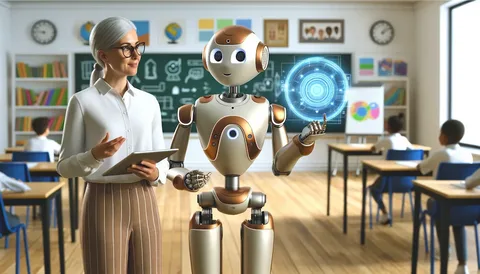
Education has come a long way from the days of chalkboards and overhead projectors. Today, technology is not just supporting teachers but transforming how learning occurs. One of the most significant innovations in this transformation is the emergence of artificial intelligence (AI) in the classroom. The shift from chalkboards to chatbots: the rise of teacher AI in education highlights a new era where teaching is more personalized, efficient, and accessible than ever before.
The Evolution of Teaching Tools
Historically, education relied heavily on physical tools: chalkboards, textbooks, and paper assignments. Teachers were the sole source of knowledge, and classrooms were designed around lectures and rote memorization. While these methods laid the foundation for modern learning, they had limitations in accommodating diverse learning styles and individualized attention.
With the advent of digital technology, tools like smartboards, tablets, and learning management systems started to enhance classroom experiences. However, it is the introduction of AI that is truly redefining the teaching process.
Understanding Teacher AI
Teacher AI refers to artificial intelligence systems designed to support, supplement, or even partially replace traditional teaching roles. These systems can assess student performance, provide instant feedback, and adapt lesson plans to suit individual learning needs. From virtual tutors to AI-driven grading platforms, teacher AI is increasingly integrated into everyday learning environments.
The rise from chalkboards to chatbots: the rise of teacher AI in education demonstrates how AI can handle repetitive administrative tasks, giving educators more time to focus on creativity, critical thinking, and personal interaction with students.
Benefits of AI in Education
- Personalized Learning: AI can analyze each student’s learning pace and style, offering customized lessons to maximize understanding.
- Instant Feedback: Students can receive real-time responses to their work, reducing delays and improving learning outcomes.
- Efficiency for Teachers: Routine tasks such as grading and attendance tracking are automated, allowing teachers to dedicate more time to instruction and mentorship.
- Accessibility: AI-driven platforms make education more accessible to students in remote areas or with special learning needs.
Challenges and Ethical Considerations
Despite its benefits, teacher AI comes with challenges. There are concerns about data privacy, potential bias in AI algorithms, and the risk of over-reliance on technology. Educators must ensure that AI tools complement rather than replace human interaction in the learning process.
The Future of Teacher AI
The journey from chalkboards to chatbots: the rise of teacher AI in education is far from over. As AI continues to evolve, it promises to foster more interactive, inclusive, and adaptive educational environments. Future classrooms may combine human creativity with AI efficiency, creating a hybrid model that maximizes learning for every student.
Conclusion
From traditional chalkboards to modern AI chatbots, education is undergoing a profound transformation. Teacher AI is not here to replace educators but to empower them, making learning more personalized, efficient, and engaging. The rise from chalkboards to chatbots: the rise of teacher AI in education signals a new chapter in education, one where technology and human ingenuity work hand in hand to shape the future of learning.
