


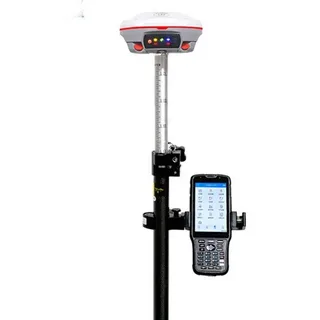
Global Positioning System (GPS) technology has become an essential tool across various industries, from agriculture to construction and surveying. However, not all GPS systems are created equal. Understanding the differences between rtk gps vs Standard GPS: Accuracy, Cost, and Use Cases Compared can help businesses and professionals choose the right technology for their needs.
Understanding Standard GPS
Standard GPS is the most common type of positioning system used worldwide. It relies on signals from satellites to determine a device’s location. Standard GPS offers location accuracy typically within 3–10 meters, which is sufficient for many consumer applications such as navigation and recreational use.
Key Features of Standard GPS:
- Affordable and widely available
- Easy to use
- Moderate accuracy suitable for general navigation
Despite its convenience, standard GPS can have limitations in precision-critical applications, where even a small positional error can lead to significant consequences.
What is RTK GPS?
RTK (Real-Time Kinematic) GPS is an advanced version of GPS that significantly improves positional accuracy. RTK GPS uses correction data from a fixed reference station to provide centimeter-level accuracy in real time. This level of precision is crucial in industries where exact location measurements are essential.
Key Features of RTK GPS:
- Centimeter-level accuracy
- Real-time data correction
- Ideal for precision-demanding applications like surveying, agriculture, and construction
Accuracy: RTK GPS vs Standard GPS
When comparing RTK GPS vs Standard GPS: Accuracy, Cost, and Use Cases Compared, accuracy is the most significant differentiator. Standard GPS typically offers meter-level accuracy, while RTK GPS can achieve accuracy down to 1–2 centimeters. This makes RTK GPS indispensable for tasks such as land surveying, precision farming, and autonomous vehicle navigation.
Cost Considerations
The cost difference between RTK GPS and standard GPS can be substantial. Standard GPS devices are relatively inexpensive, making them accessible for everyday consumer use. On the other hand, RTK GPS systems require additional hardware, subscription services for correction data, and sometimes specialized training, making them a more significant investment.
Summary of Cost Differences:
| Feature | Standard GPS | RTK GPS |
| Device Cost | Low | High |
| Accuracy Upgrade | Not available | Yes, via corrections |
| Maintenance & Support | Minimal | Moderate to High |
Use Cases: Where Each Excels
Standard GPS Use Cases:
- Personal navigation apps
- Recreational activities like hiking or boating
- Basic fleet tracking
RTK GPS Use Cases:
- Surveying and mapping land boundaries
- Precision agriculture (planting, irrigation)
- Construction and civil engineering projects requiring exact measurements
- Autonomous machinery and drones
By comparing RTK GPS vs Standard GPS: Accuracy, Cost, and Use Cases Compared, it’s clear that the choice depends heavily on the required level of precision and budget.
Conclusion
Choosing between RTK GPS and standard GPS depends on your specific application requirements. For everyday navigation and general use, standard GPS is sufficient and cost-effective. For industries that demand high precision, RTK GPS is the superior option despite its higher cost. Understanding the differences in accuracy, cost, and use cases can help professionals make informed decisions and optimize their operations.
