


Introduction
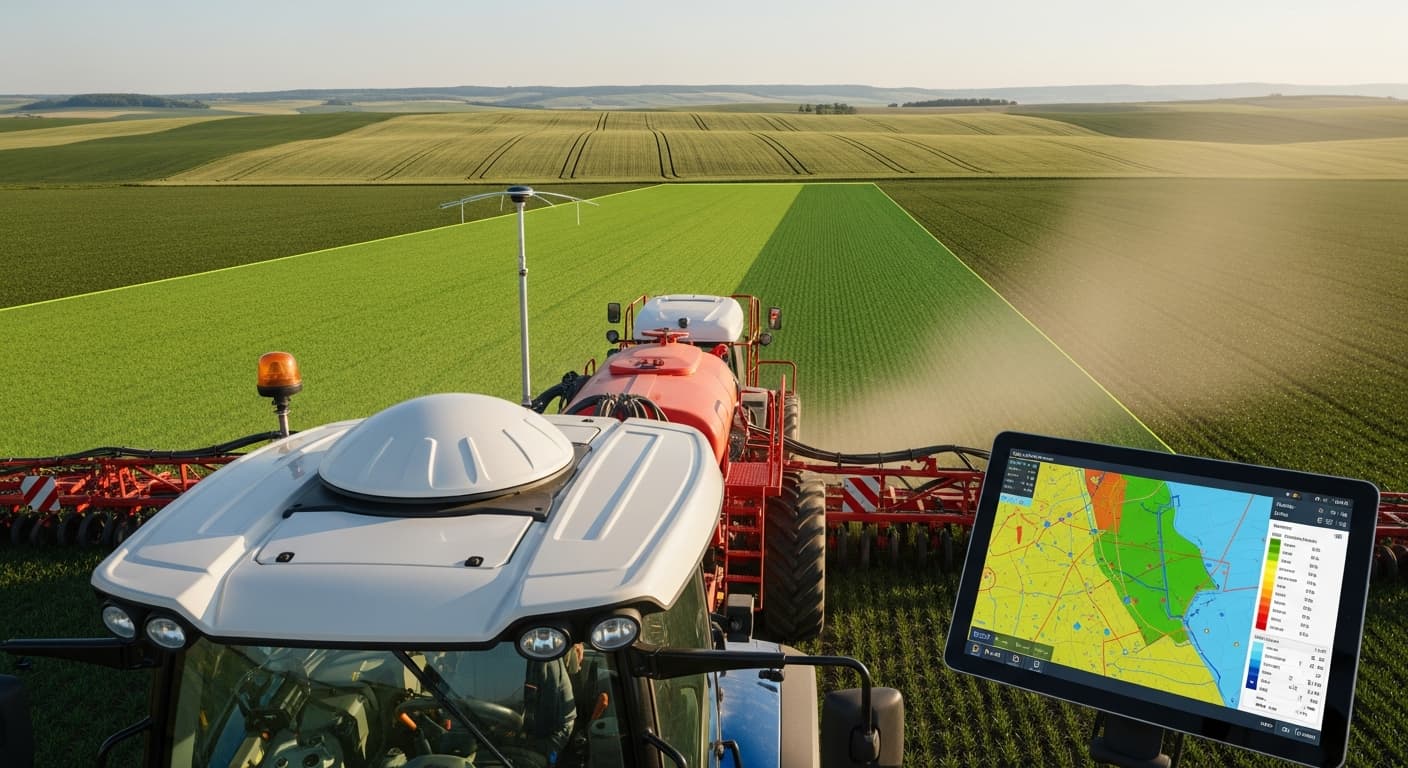
Modern agriculture is rapidly evolving with advanced positioning technologies that improve accuracy, efficiency, and productivity in the field. One of the most impactful innovations is Enhancing Tractor Guidance Systems with precision farming gnss, which enables farmers to achieve centimeter-level accuracy in steering and field operations. By integrating satellite navigation with smart farming tools, tractors can follow optimized paths, reduce overlap, and minimize resource waste.
The adoption of Enhancing Tractor Guidance Systems with Precision Farming GNSS is reshaping how large-scale farming operations are managed, making them more data-driven and efficient than ever before.
Enhancing Tractor Guidance Systems with Precision Farming GNSS in Modern Agriculture
Tractor guidance systems have traditionally relied on manual operation, which often leads to inefficiencies such as uneven coverage and input waste. Today, GNSS (Global Navigation Satellite Systems) technology brings a new level of precision by guiding tractors along pre-defined paths.
Enhancing Tractor Guidance Systems with Precision Farming GNSS in Modern Agriculture allows farmers to operate machinery with extreme accuracy, even in low-visibility conditions like fog, dust, or nighttime farming. This ensures consistent row spacing, improved planting accuracy, and better overall field management.
Key Components of GNSS-Based Tractor Guidance Systems
Modern tractor guidance systems rely on several integrated components working together:
1. GNSS Receivers
These devices collect satellite signals and determine the tractor’s exact position in the field with high precision.
2. Correction Systems (RTK or DGPS)
Real-Time Kinematic (RTK) and Differential GNSS improve positional accuracy, often reducing errors to just a few centimeters.
3. Onboard Displays and Control Units
These interfaces provide real-time guidance, showing operators the optimal driving path and correcting deviations instantly.
4. Autosteer Technology
Advanced systems can take full control of steering, allowing tractors to operate with minimal human intervention.
Together, these technologies make precision farming more reliable and scalable.
Benefits of GNSS-Enabled Tractor Guidance
The integration of GNSS into tractor systems offers numerous advantages:
- Reduced fuel consumption due to optimized driving paths
- Lower input costs through precise seed and fertilizer placement
- Increased crop yield through uniform field coverage
- Less operator fatigue during long working hours
- Improved sustainability through reduced environmental impact
Farmers adopting these systems often see immediate improvements in operational efficiency and long-term profitability.
Enhancing Tractor Guidance Systems with Precision Farming GNSS for Future Farming
As agriculture continues to adopt automation and digital tools, GNSS-based tractor guidance will become even more advanced. Artificial intelligence, machine learning, and IoT integration are expected to further enhance decision-making and field accuracy.
Enhancing Tractor Guidance Systems with Precision Farming GNSS for Future Farming represents a shift toward fully autonomous agriculture, where machines can independently analyze, decide, and execute farming tasks with minimal human input.
Conclusion
The role of GNSS technology in agriculture is no longer optional but essential for modern farming success. Enhancing Tractor Guidance Systems with Precision Farming GNSS continues to transform traditional farming methods into highly efficient, precise, and sustainable systems. As adoption grows, farmers can expect higher yields, lower costs, and smarter farm management practices driven by advanced satellite navigation technology.
